Lessons on Guitar, Bass, Drums & Piano | Warriewood, Northern Beaches
Social & Exploratory Music Learning for 4-8 yrs
- Mondays and Tuesdays (Excludes Public Holidays)
- 3:45pm to 6:15pm
- Warriewood Community Centre: East Hall
30 Minute Multi-instrument Small Groups
Music lessons that stay fun.
At Wayfinding, our students learn to really PLAY with music: with other kids, other instruments, games, and challenges that keep them making new discoveries.
Rather than being locked into one instrument from day one, we encourage all our students to explore across multiple instruments, and understand how each instrument works separately and together.
We welcome all levels of experience (from complete beginners to advanced). Some of our students sign up for a low-pressure and fun introduction music learning, then fall in love with it long-term; others sign up seeking a relaxed alternative to traditional and private lessons.
Our students are not made to memorize scales or rigid AMEB exam repertoire. Instead they are guided by our expert musician teachers with real musical challenges involving playing by ear, improvisation, and movement-based learning: always adapted to the curiosities and desires of the students in the room.
Our approach keeps our students engaged, passionate, and independently invested in their own learning. All of which are non-negotiables for getting very good at music!
Book your child in for a free lesson, no commitment, no instrument needed!
Very few kids get to learn music this way—but it’s how most of the musicians we listen to actually learned.
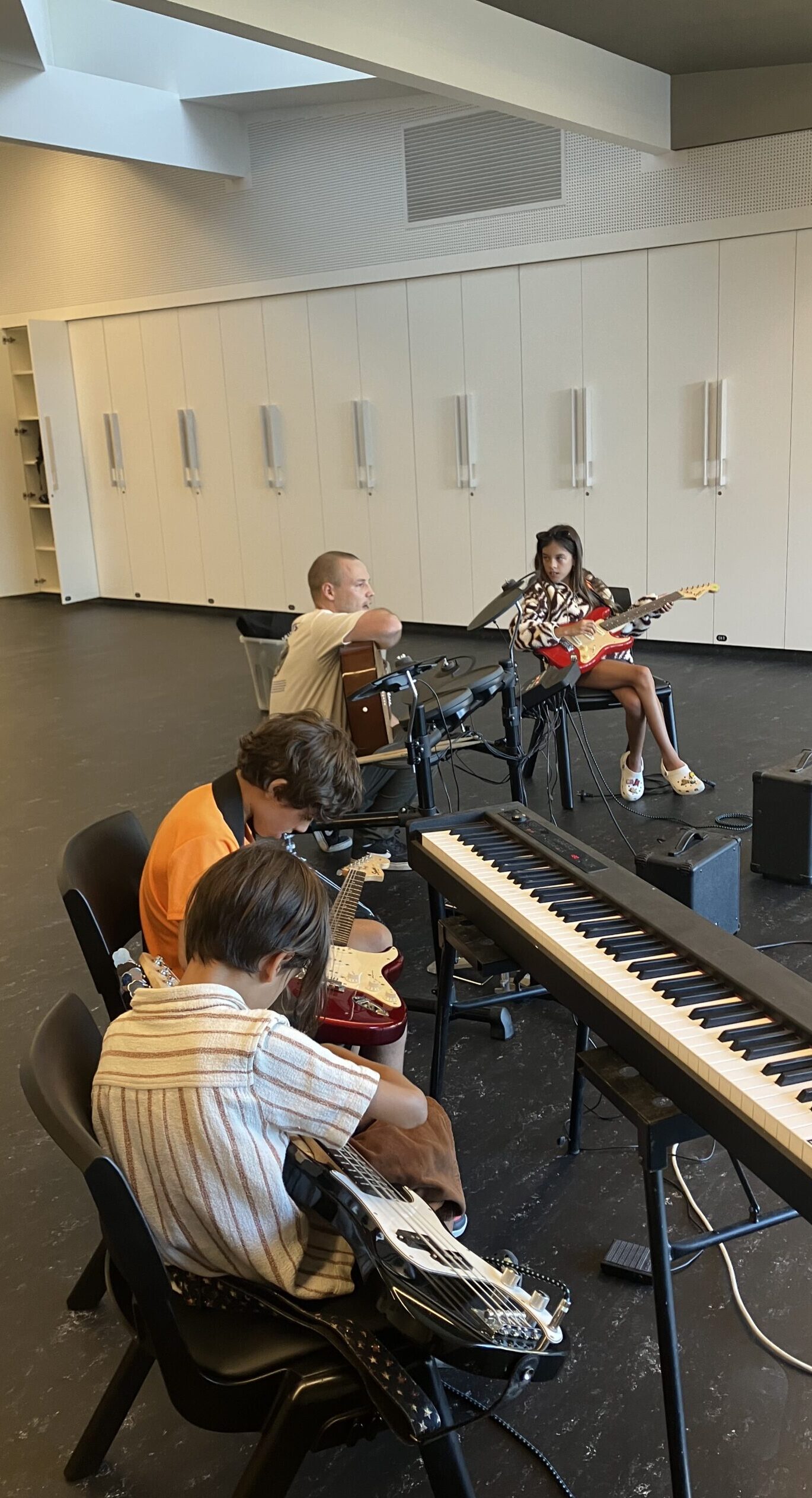
Very few kids get to learn music this way—but it’s how most of the musicians we listen to actually learned.
About Wayfinding Music
Your child deserves music lessons that excite them every week. At Wayfinding our space is purpose-built to make kids fall in love with music. Located at Warriewood Communtiy Centre — across from Narrabeen North Public School, two minutes walk from Warriewood Square.
Our program is built around your experience:
- 30 minute weekly lessons during the NSW school term
- Simple monthly payments — easy for budgeting
- All instruments provided during sessions
- First fortnight is free, cancel any time.
- Plenty of onsite parking
- All staff have valid NSW Working With Children Checks.
Monty Taylor
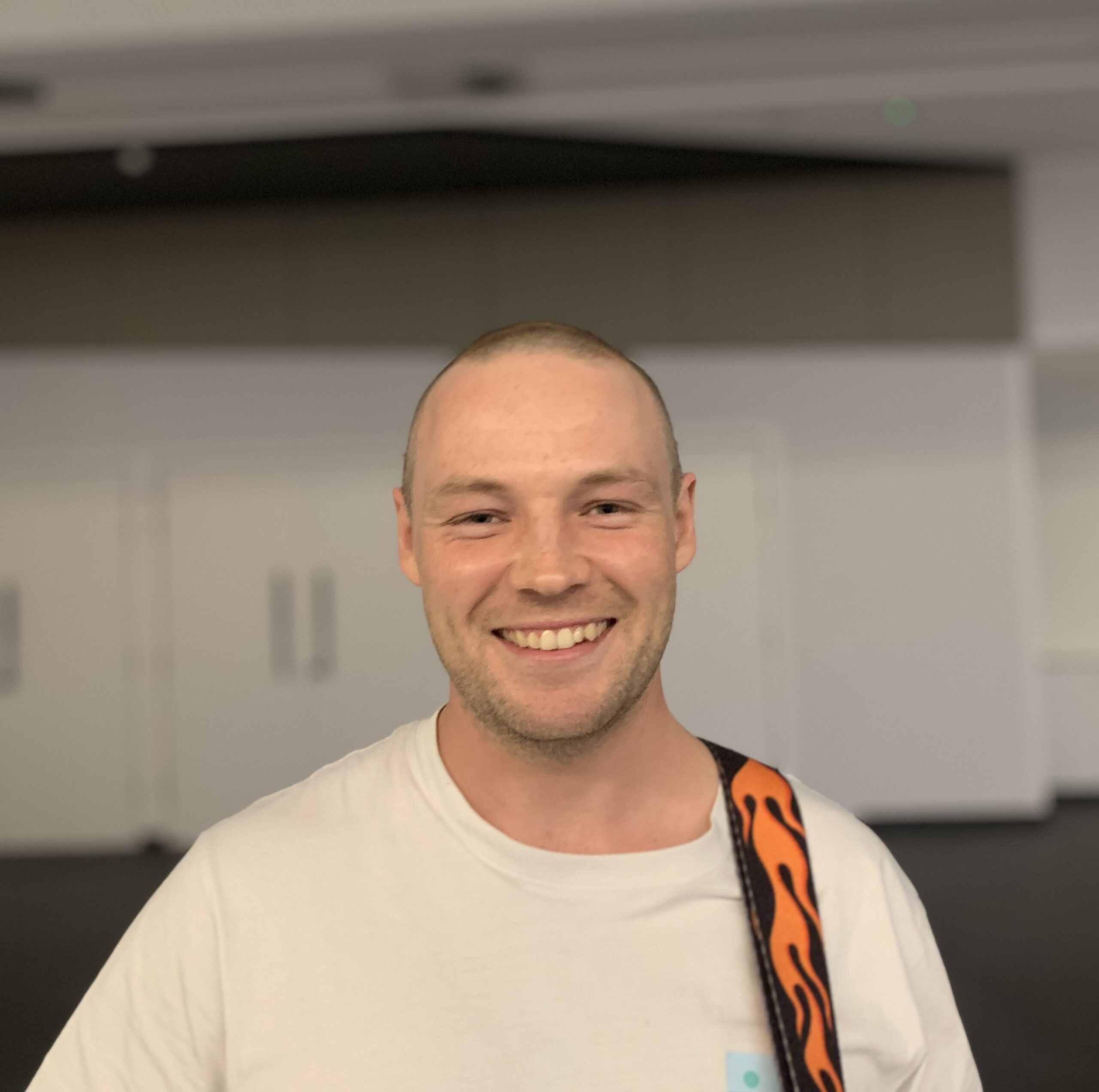
Monty has been teaching music to children and adults for over 10 years, with more than 30 weekly students currently on his books. His performance background spans jazz, improvisation, rock and electronic music. Though he has soft spots for metal and country. He holds a Bachelor’s degree majoring in Psychology and Music and has studied at the Sydney Conservatorium of music.
Monty’s passion lies in ecological and constraints led approaches to music pedagogy and he brings evidence aligned expertise into every Wayfinding session. When he’s not teaching he’s surfing or playing saxophone, guitar and drums with friends on the Northern Beaches.
First Fortnight INSTRUMENT DISCOVERY
Your child’s first fortnight at Wayfinding is designed to get them settled into our learning space, find an instrument they love for home play, and launch them into long-term music learning.
- Discover instruments: piano, electric and acoustic guitars, ukelele, bass, and drums
- Achieve some quick wins across instruments
- Find an instrument they love for home practice, with the option to continue into longterm membership
2026 Promotion: Sign-up and you will receive this intro program for FREE. With no lock-in contract or hidden strings attached.
Informed Choice
DISCOVERY gives your child the confidence to pick an instrument they care about and tells you if Wayfinding is right for them.
Low Risk
No instrument hire, purchase or long-term commitment needed. Just come and experience learning at Wayfinding Music.
Pricing
FIRST FORTNIGHT FREE
Ongoing Membership roughly equivalent to $44 per 30-minute session.
- Secures a dedicated place in the program
- Weekly sessions aligned with the NSW school term (includes pupil free days)
- Small group format (up to 10 students)
- Instruments provided during sessions
- Billed monthly from February to December (11 months), cancel any time.
- Public holidays excluded
FAQs
How Are the Sessions Structured?
When your child arrives for their first session they will be gently encouraged to get exploring the instruments and learn what they can do. Some kids are happy self-directing their first couple of sessions as they get to know the instruments and the possibilities of the space. Others may be assisted with some gentle guidance.
As they get settled, our coaches gently follow-and-extend their exploration. This includes intentional guidance, demonstration & modelling, and the facilitation of games that train: listening & audiation, movement & dancing, improvisation, and creativity.
We continuously modify our approach, in response to the needs of the kids in each session. Importantly at Wayfinding we maintain an approach that is inclusive, voluntary and autonomy-supportive. We do not force the kids through activities or repertoire that don’t interest them, and if a task doesn’t land at one moment, we give them time, and choice, or even try a completely different activity.
We take an approach to learning that is non-linear (because all learning is). So we wish to respect the unique desires of every student by continuously adapting our curriculum during and between sessions, rather than assuming one size fits all.
Learning this way is efficient, effective, and low stress. Often students do not even notice or have words for what they are learning because they are having a great deal of fun, while absorbing new habits, patterns of coordination, and creating music on the spot.
Alongside instrumental skills, students learn how to plan, monitor, and adjust their own practice. They build self-regulation and agency, and they learn to collaborate with others. Under these conditions, learning music is intrinsically meaningful and motivating.
Over the long-term their playing begins to gain complexity as the students gain coordination, and with our guidance they start taking on more complex challenges.
Does my child need to bring their own instruments?
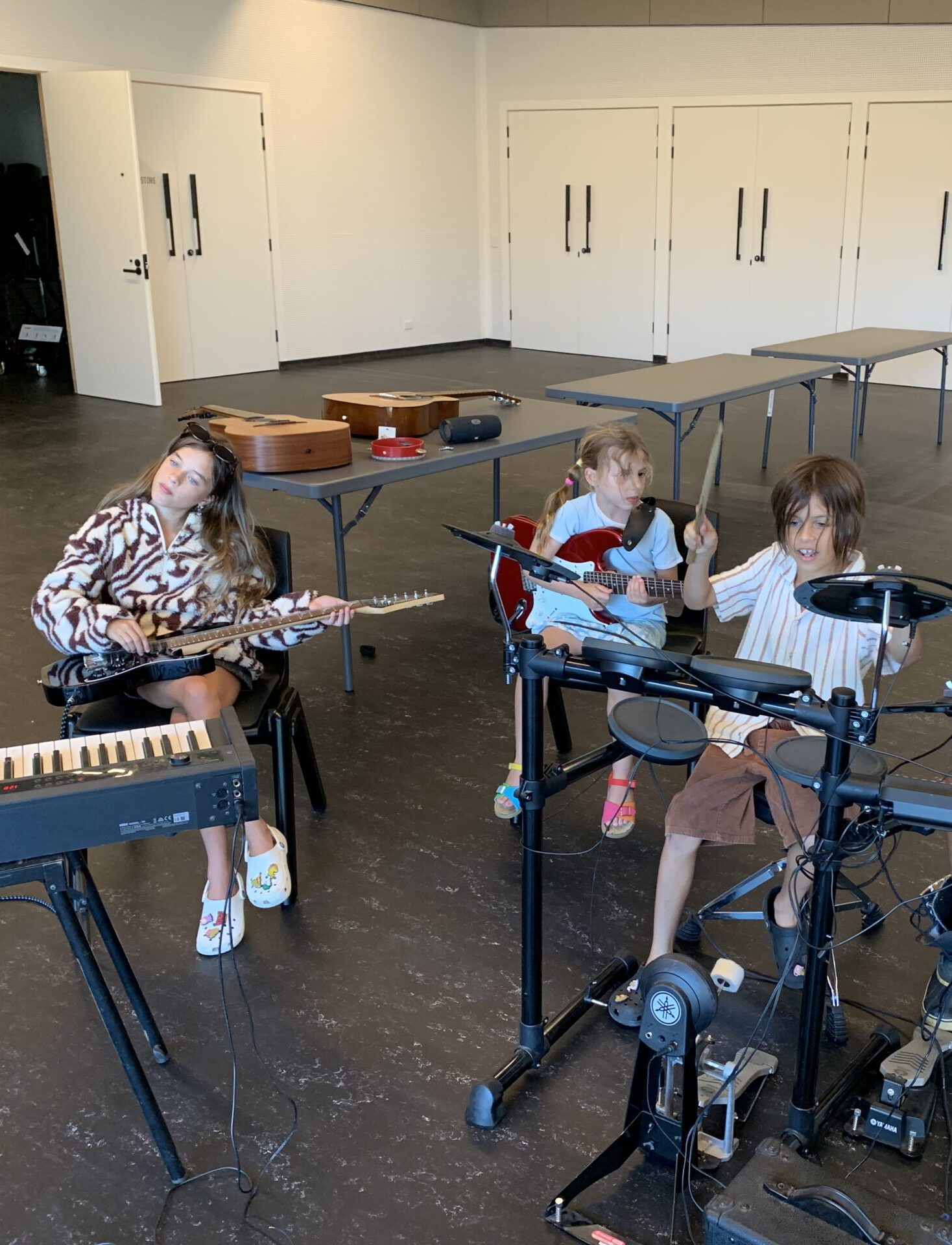
No, your child can sign up without owning any instruments. Our learning space offers electric drums, acoustic and electric guitars, piano, keyboard, and a range of auxiliary percussion instruments, so students can begin learning immediately.
Though to allow learning to consolidate and to get the best value out of the lessons, families should aim to pick up an instrument to play at home within the first month of attendance. Please reach out if you need assistance in finding or choosing an instrument.
Do you offer private lessons?
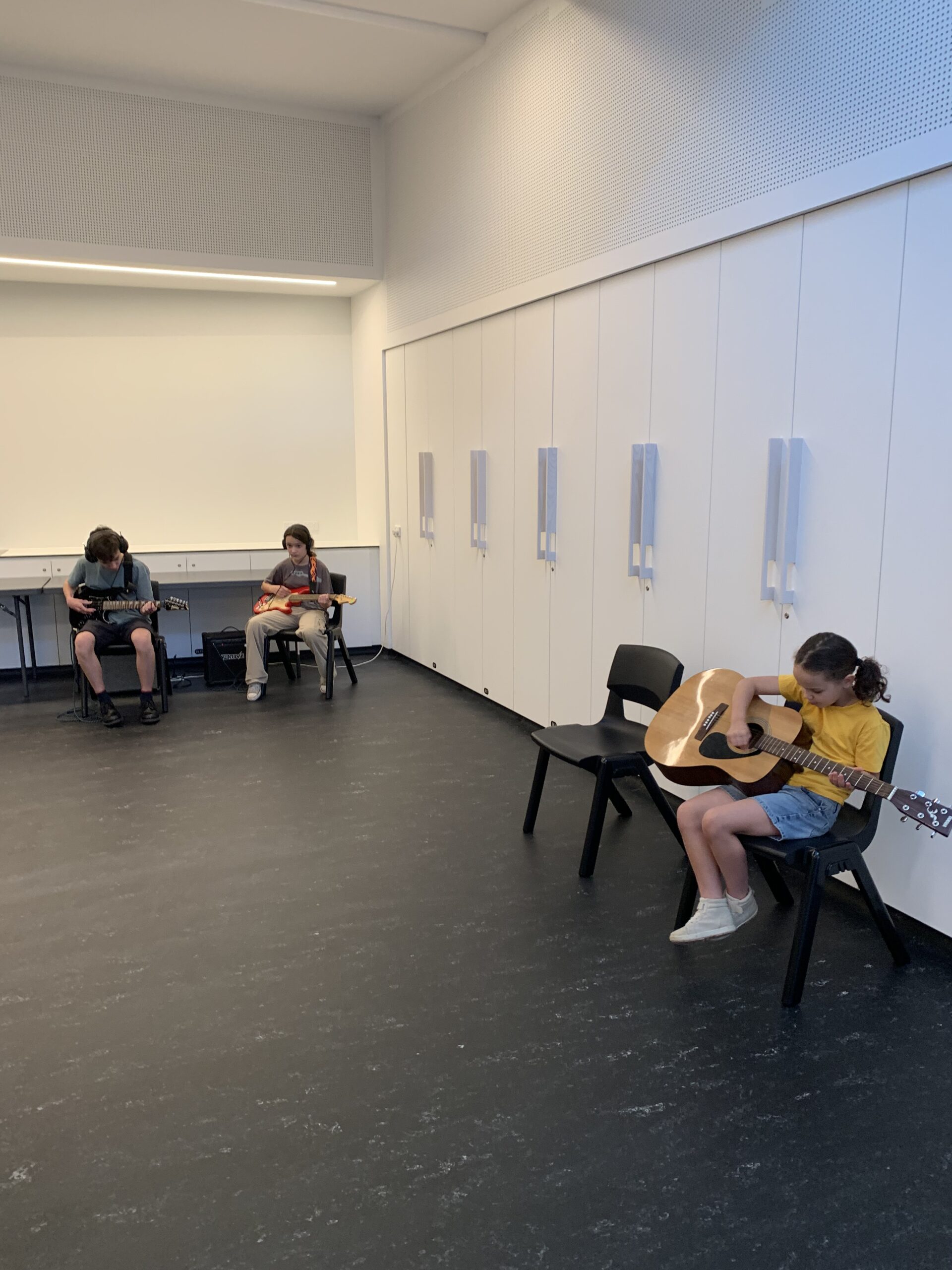
We do not offer private lessons. Our large space allows students to practice individually or with other students if they so desire, alongside the guidance of our teaching staff. They may also use our headphones to assist with this.
A central component of our program is that students learn from and with each other, as well as from teachers. This makes the process fun, real, inspiring, and affords them frequent low friction opportunities to start bands and creative projects together.
Does my child need private lessons as well?
No. Though students are welcome to seek private lessons in addition, if they desire.
Wayfinding is structured so that students go home knowing what and how they can practice, are motivated to learn more, and have constant low friction opportunities to engage in joint creative and performance activities with other students.
We believe this is where the real learning happens. We also document and track progress, and keep close communication with parents about how we can best help your children grow in music.
Multi-instrumental? Will I have to buy a bunch of instruments?
In short – no – but keen and committed students should at minimum have one instrument that they like to play available and within easy access at home.
Students who want to keep improving will want to practice at home. If this means they want to practice multiple different instruments, then families are free to decide what they can accommodate. Music skills transfer across instruments, so no practice is wasted time.
Motivation and autonomy is best sustained by having multiple instruments to choose from. A practice space with 3 instruments offers 3 times the fun, 3 times the pratice time, and more than 3 times the learning possibilities when combined together.
Thankfully quality instruments can be purchased for low cost new, and at even lower cost in the secondhand market. You could buy three entry level instruments in our range for half that of a student saxophone or trumpet!
We recommend starting with our free First Fortnight Discovery program, and giving them time to decide what instrument(s) they would like to pursue at home. This will enable them to easily practice what they have been working on in our lessons at home and vice versa.
We are very happy to to provide advice with picking a quality instrument, setting up effective home practice spaces and practice routines. Just send us an email or chat with us in person / via phone.
Can I read more about your approach?
A product of our founders’ studies in both music and psychology, Wayfinding’s philosophy draws on approaches of non-linear pedagogy such as the constraints-led approach and differential learning. We’re inspired by the works of James J. Gibson and Eleanor Gibson, who saw perception not as something that happens only in the mind, but as something that emerges through active engagement with the environment. Instead of learning by being told what to do, people learn by exploring, noticing patterns, and responding to what’s around them. This approach is being applied across sports, music and arts, education and design fields with great success.
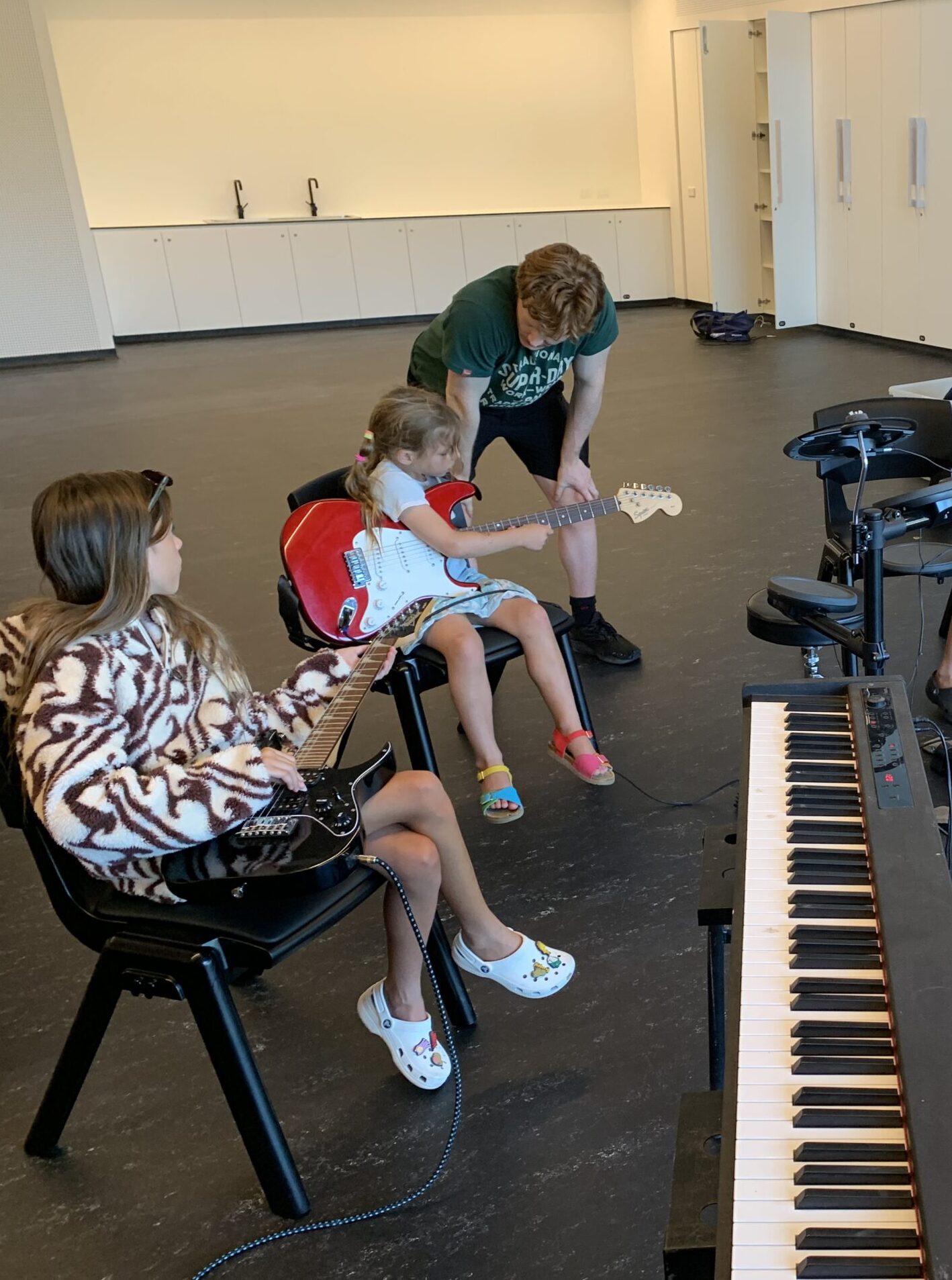
Our staff guide in the moment by playing alongside students, demonstrating, providing challenges, guiding attention, and ensuring active music-making occurs. We provide dynamic live accompaniment and demonstration, adjust instrumentation and roles, and provide individualised tasks so that students are always making new musical discoveries.
Many musicians have developed almost entirely through being embedded in rich, active music environments rather than formal lessons. Jimi Hendrix, for instance, learned by constantly playing, jamming with others, and immersing himself in band settings where music was happening all the time. Similarly, Paul McCartney grew up in a household where music was part of everyday life, then developed further through endless informal playing, writing, and collaborating with peers. In both cases, learning came from having ongoing access to instruments, people, and music-making situations in environments that naturally invited exploration, experimentation, and shared musical activity. This is the kind of learning environment most musicians wish they’d had as kids.